Characters are stored in fields of one, two, three, four, six, or eight bits. In the table below, the Character Type column lists the valid ALGOL character types. The Field Size and Bits Used columns show the field size in bits and the number of bits within that field, respectively, that are used for storing each type of character. The Valid Constructs column shows the character-oriented ALGOL constructs that are used to manipulate each character type.
|
Character Type |
Field Size |
Bits Used |
Valid Constructs |
|
EBCDIC |
8 |
8 |
Pointer, character array, string, string literal |
|
ASCII |
8 |
7 |
Pointer, character array, string, string literal |
|
Hexadecimal (HEX) |
4 |
4 |
Pointer, character array, string, string literal |
|
Octal |
3 |
3 |
String literal |
|
Quaternary |
2 |
2 |
String literal |
|
Binary |
1 |
1 |
String literal |
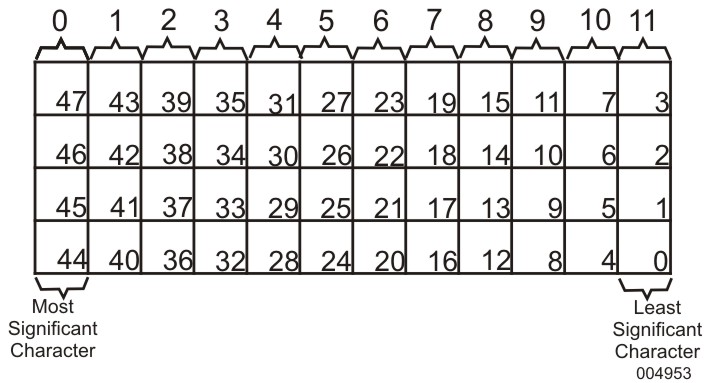
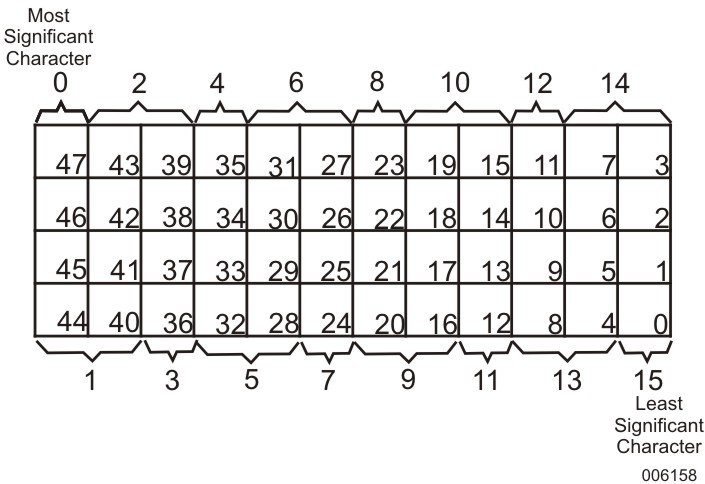
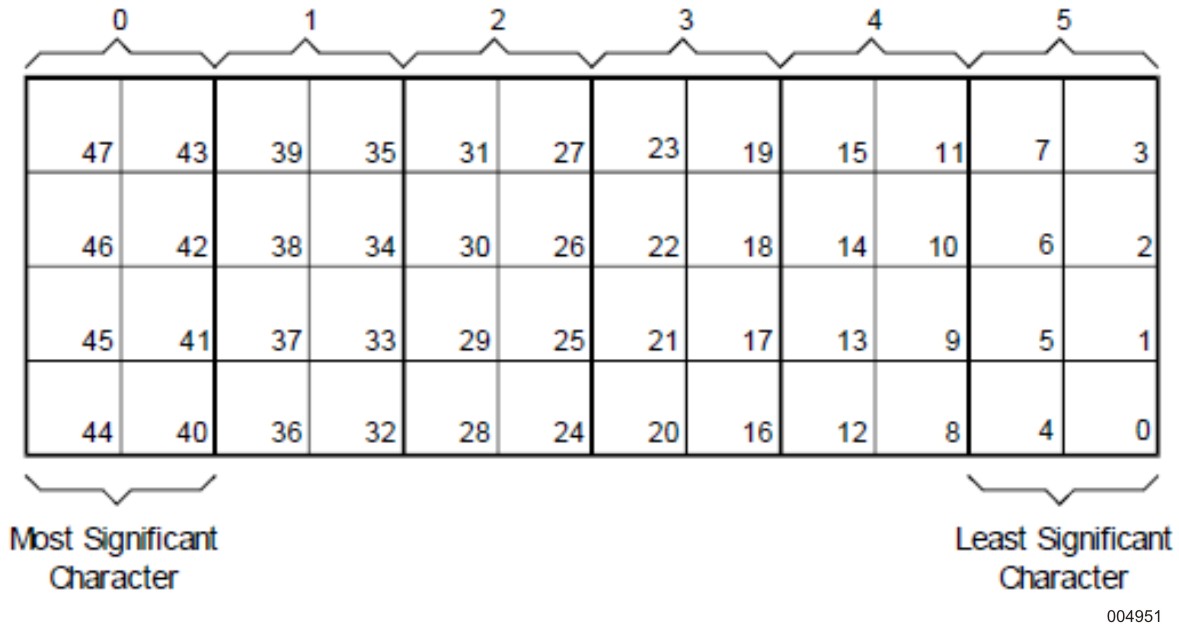
EBCDIC Characters (8-Bit Fields) through Octal Characters (3-Bit Fields) illustrate how the various character types are stored within a data word.
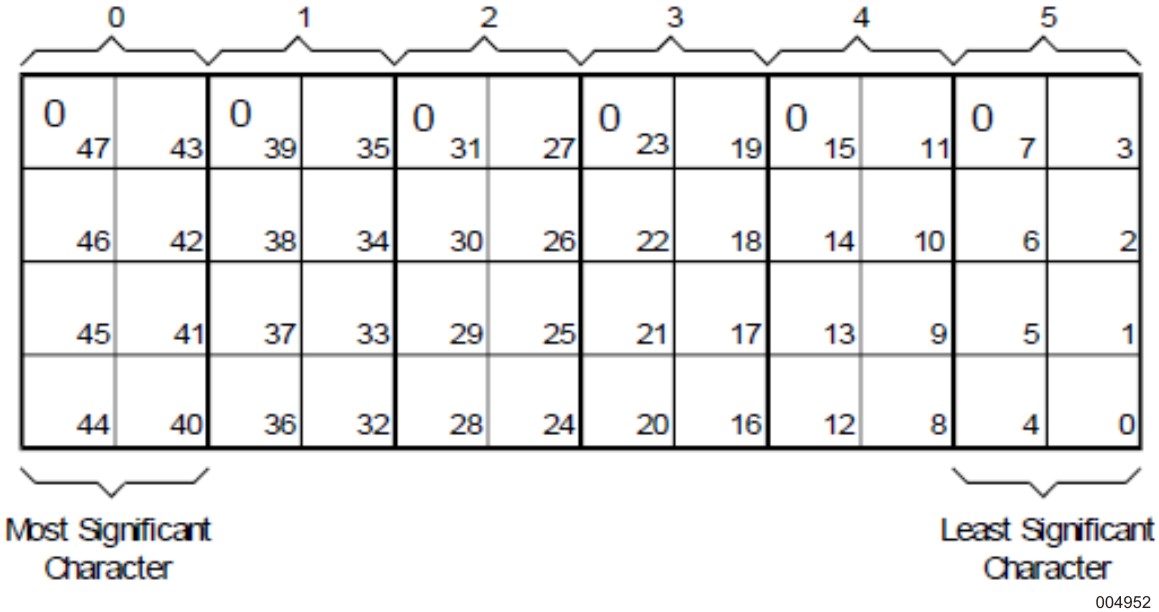
ASCII Characters (8-Bit Fields) shows that ASCII characters, which are 7-bit characters, are stored in 8-bit fields (as are EBCDIC characters). The zeros shown for bits 7, 15, 23, 31, 39, and 47 indicate that these bits are 0 when ASCII characters are stored.